What Forest Bathing Taught Me About Communicating Nature
A personal reflection on how slowing down in nature has shaped my approach to storytelling, marketing, and communications.
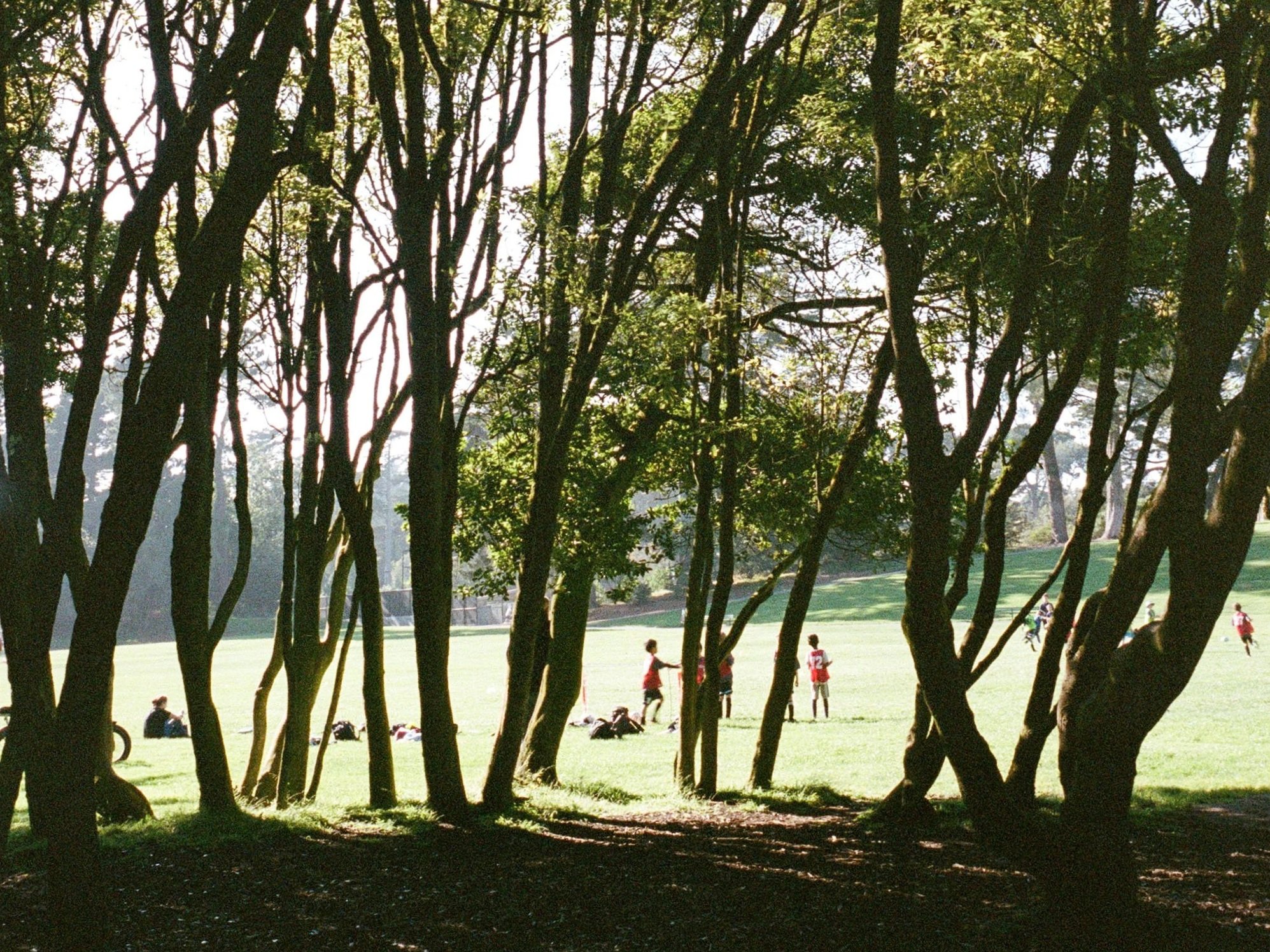
Golden Gate Park, San Francisco, photographed on 35mm film.
I am writing this from one of my favorite spots in Golden Gate Park, surrounded by trees while the city continues moving just beyond them.
I often return to nature when I need to slow down and understand where I am, both literally and in my life. Forest bathing has been part of several important transitions for me, even before I knew there was a name for the practice.
After high school, I spent time living with my grandmother in Yokohama, Japan. I did not have a clear direction for what I wanted to do next, so I would walk through the forest behind her house and give myself room to think. That period eventually led me back to Northern California, where I studied anthropology and began exploring the relationships people build with culture, place, and the natural world.
Years later, during the COVID-19 lockdowns while living in Santa Cruz, I found that sense of calm again among the redwoods. The world felt uncertain and overwhelming, but the forest gave me somewhere to pause and take in what was happening.
Even now, when life becomes stressful, I find myself returning to trees, trails, coastlines, and other quiet places.
Earlier this year, I wrote A Beginner’s Guide to Forest Bathing in California State Parks for California State Parks Foundation. While researching and writing the guide, I began thinking about how the practice of forest bathing also reflects the way I approach environmental communications.
Slowing Down Helps Us Notice What Matters
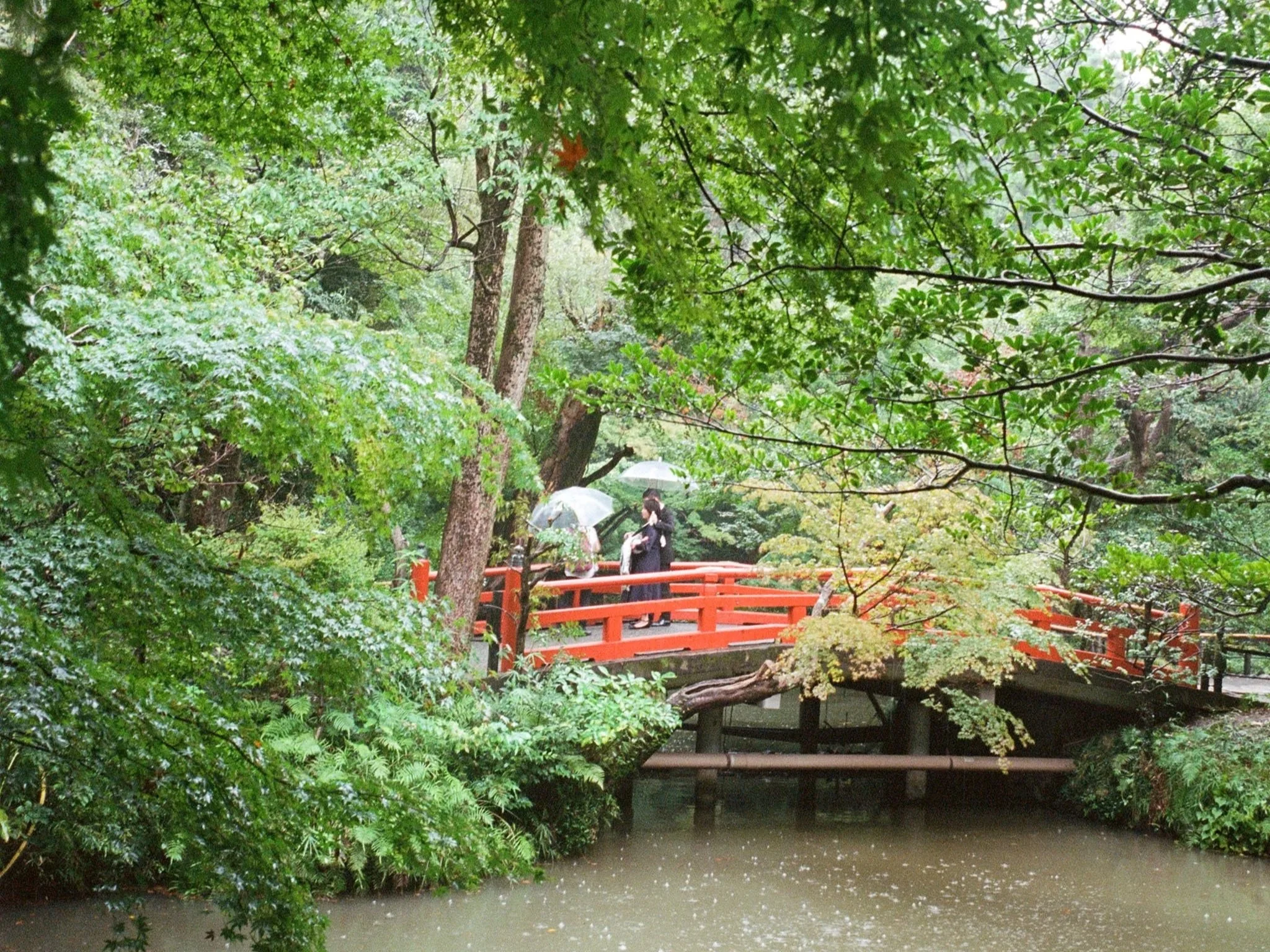
Kamakura, Japan, photographed on 35mm film.
Forest bathing asks us to move slowly and pay attention to our surroundings. Instead of trying to reach a destination, we notice the smaller details along the way.
What does the air smell like? What sounds are nearby? How does the ground feel beneath our feet? What changes when sunlight passes through the trees?
These details are also important when communicating about nature. Broad issues such as climate change, habitat loss, and park funding can feel distant or overwhelming. Personal stories and sensory details can help people understand what those issues mean for a place they know or an experience they value.
People might not remember every statistic, but they often remember the smell of a pine forest, the sound of waves against the coast, or the first wildflower they noticed along a trail.
Those memories give environmental issues a human scale. They remind us what is at stake and why protecting natural places matters.
Nature Has to Feel Accessible
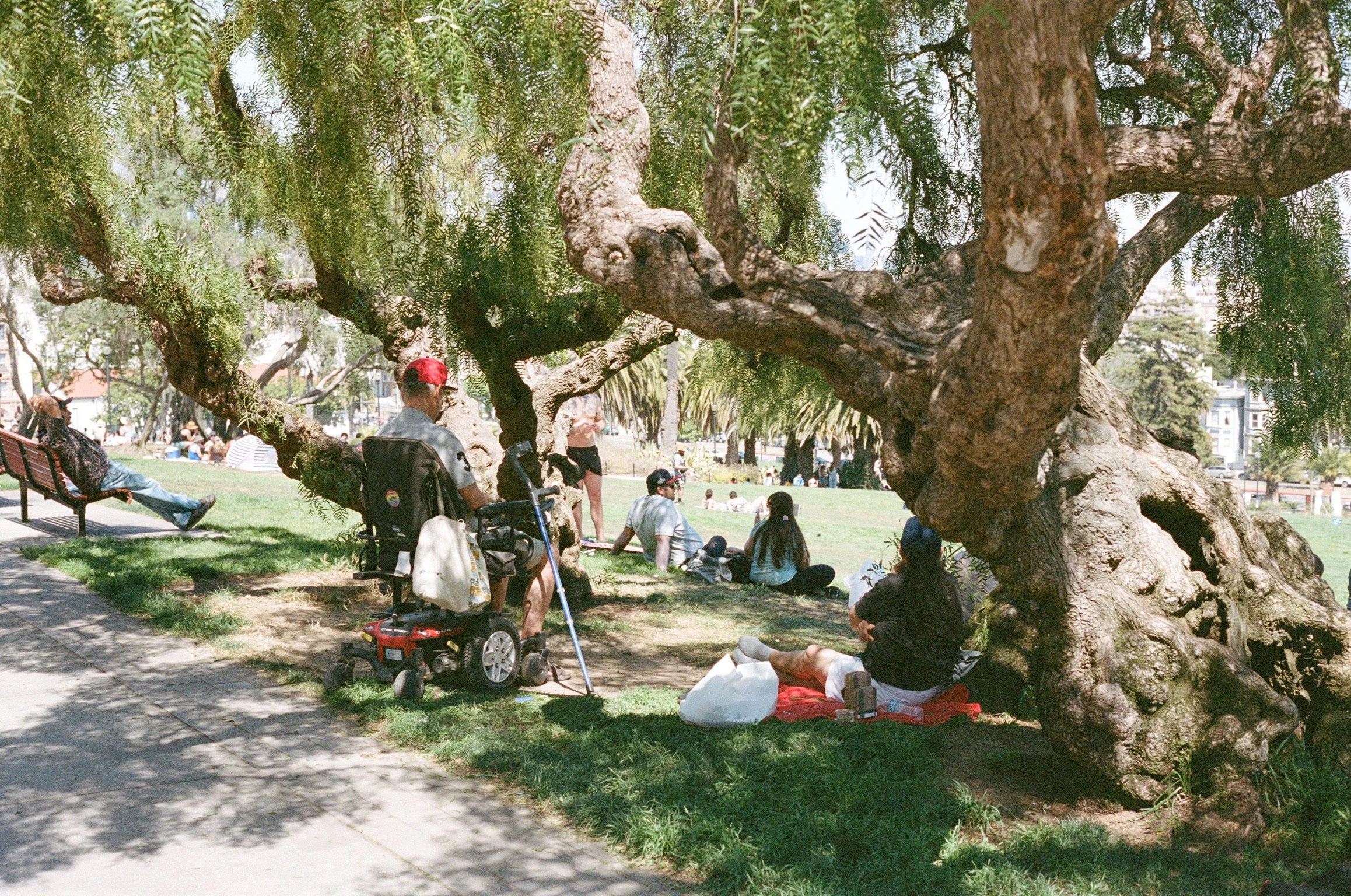
Mission Dolores Park, California, photographed on 35mm film.
Forest bathing does not require an expensive trip, special equipment, or hours of outdoor experience. It can begin with a few quiet minutes beneath a tree, in a neighborhood park, or anywhere someone can safely slow down and notice the natural world around them.
That accessibility matters to me.
Living in a city, I know that not everyone has easy access to a forest or considers themselves an “outdoors person.” Physical ability, transportation, cost, experience, and a sense of belonging can all shape whether someone feels comfortable visiting a park.
Environmental communications can either reinforce those barriers or help reduce them. Practical information, accessible content, thoughtful representation, and stories featuring different communities and ways of experiencing nature can make it easier for someone to see a place for themselves.
This includes creating digital and in-person experiences that consider people with disabilities, older adults, urban communities, and people who may be exploring nature for the first time. Sometimes a photograph, story, or virtual experience can also help someone connect with a place they cannot visit themselves.
Nature does not need to look like a remote wilderness to be meaningful. Connection can begin wherever people are.
Connection Gives People a Reason to Act
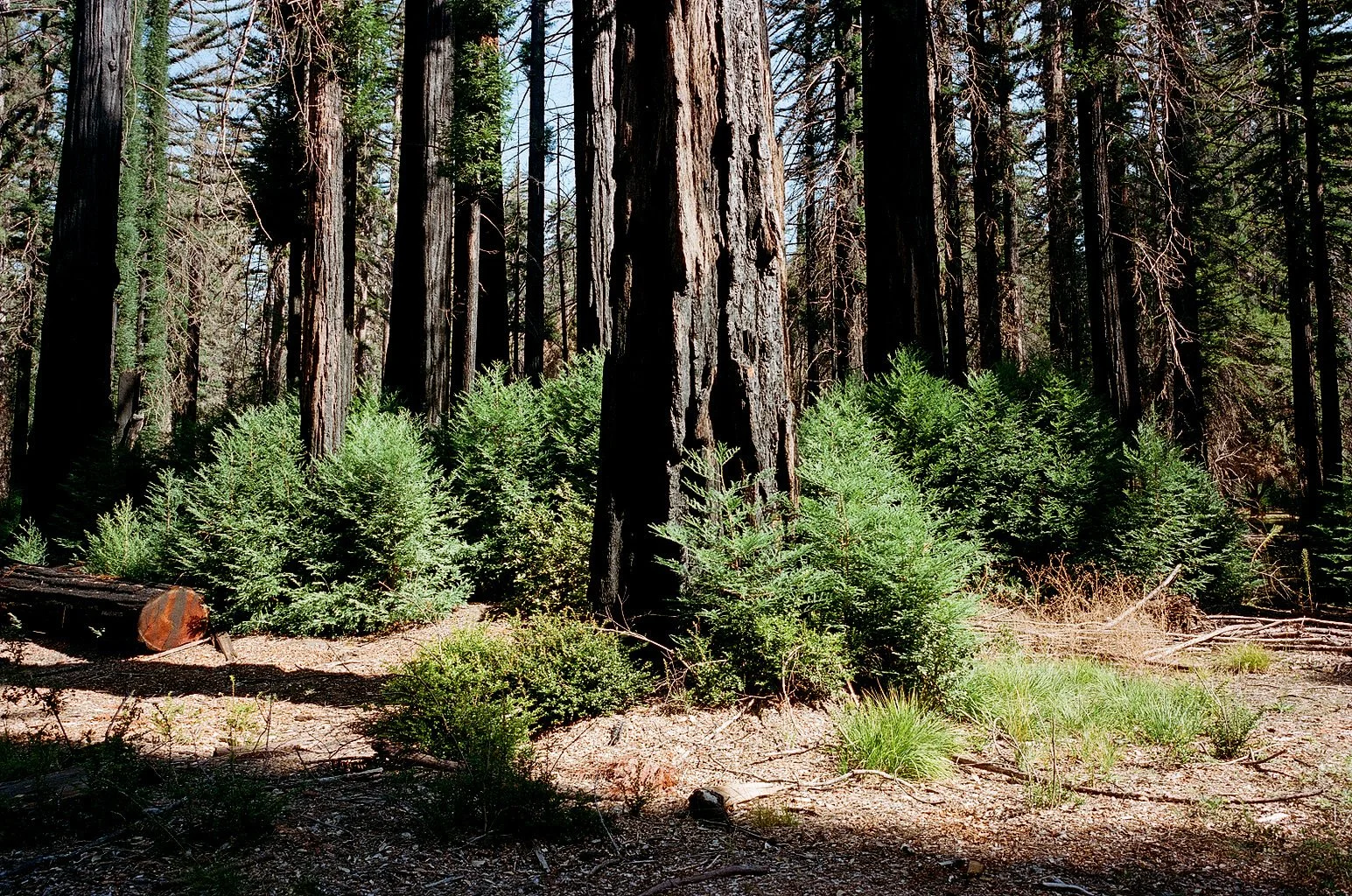
Big Basin Redwoods State Park, California, photographed on 35mm film.
Facts are essential to environmental work, but facts alone do not always move people.
Before someone volunteers, donates, advocates, or changes a habit, they often need a reason to care. That reason may begin with a personal experience, a family memory, a photograph, or a story that helps them understand why a place matters.
This is where marketing and communications can be especially powerful. Our role is not simply to promote a greenspace or campaign. It is to help people form a relationship with the mission and understand how they can become part of it.
That does not mean turning every peaceful moment in nature into an urgent appeal. Sometimes helping someone pause, notice, and feel connected is part of the work. Care can grow from that connection, and action can follow.
Bringing My Skills Back to Nature
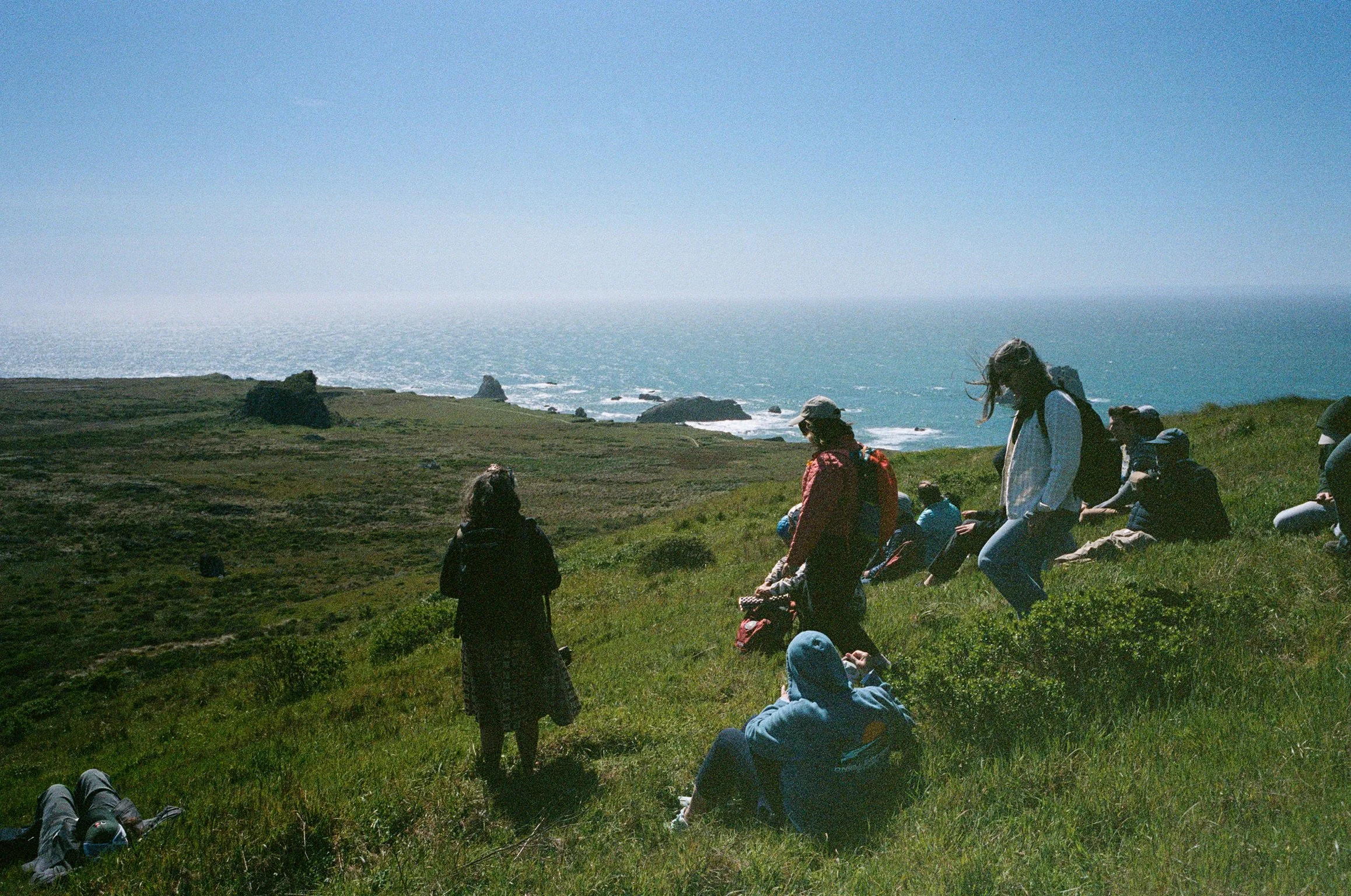
A field day with my UC California Naturalist class at Sonoma Coast State Beach, photographed on 35mm film.
I pursued my California Naturalist certification for personal reasons. I wanted to understand the landscapes around me more deeply and become better equipped to help protect them.
The experience also helped me recognize how the skills I have gathered throughout my life can work together. Art, photography, writing, anthropology, interpretation, and marketing can all help people experience nature differently.
I want to use those skills to share the beauty of the world with people around me, including friends who live in the city, people who are hesitant to explore the outdoors, and family members like my grandmother who may not always be able to visit these places themselves.
We are living through climate change, and the scale of what is happening can be difficult to comprehend. Staying close to the mission, and to the places themselves, helps me remember why this work matters.
Forest bathing has taught me that we do not always need to move faster to find our direction. Sometimes we need to slow down, pay attention, and reconnect with what we are trying to protect. For me, that is also where meaningful environmental communication begins.